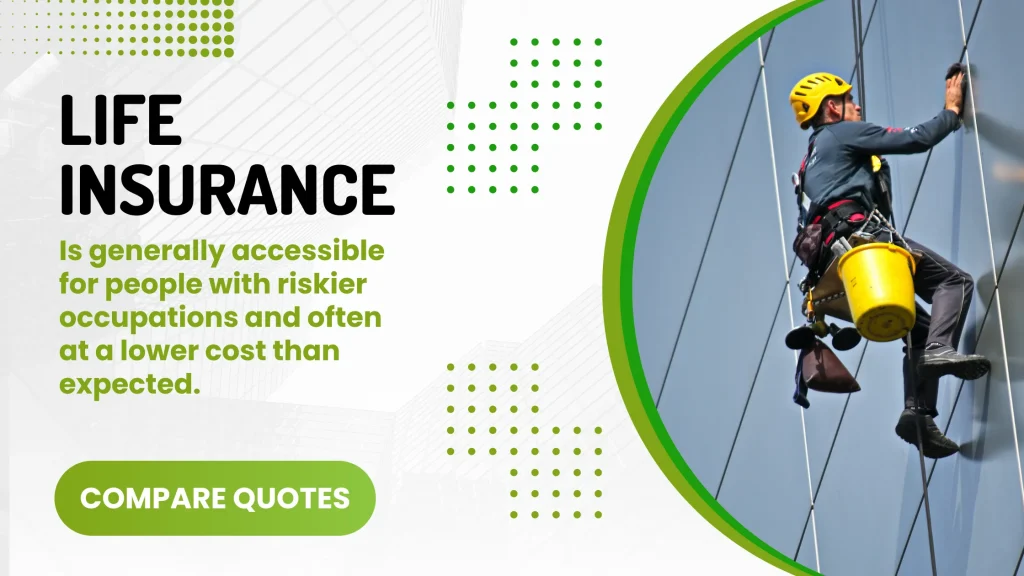
For some of us, our occupation involves a higher-than-normal risk to our safety and lives.
In some cases, these higher-risk occupations make it harder for a person to obtain life insurance, or, depending on the insurance company, it may cost slightly more.
The experts at Claybrooke understand how important life insurance is to individuals and families and how much more critical this coverage can be for those who put their safety and lives on the line daily.
High-Risk Life Insurance Cover From Claybrooke – Quote Form
What Occupations are Considered ‘High Risk’
The first step in securing life insurance for a high-risk occupation is identifying what “high risk” really means.
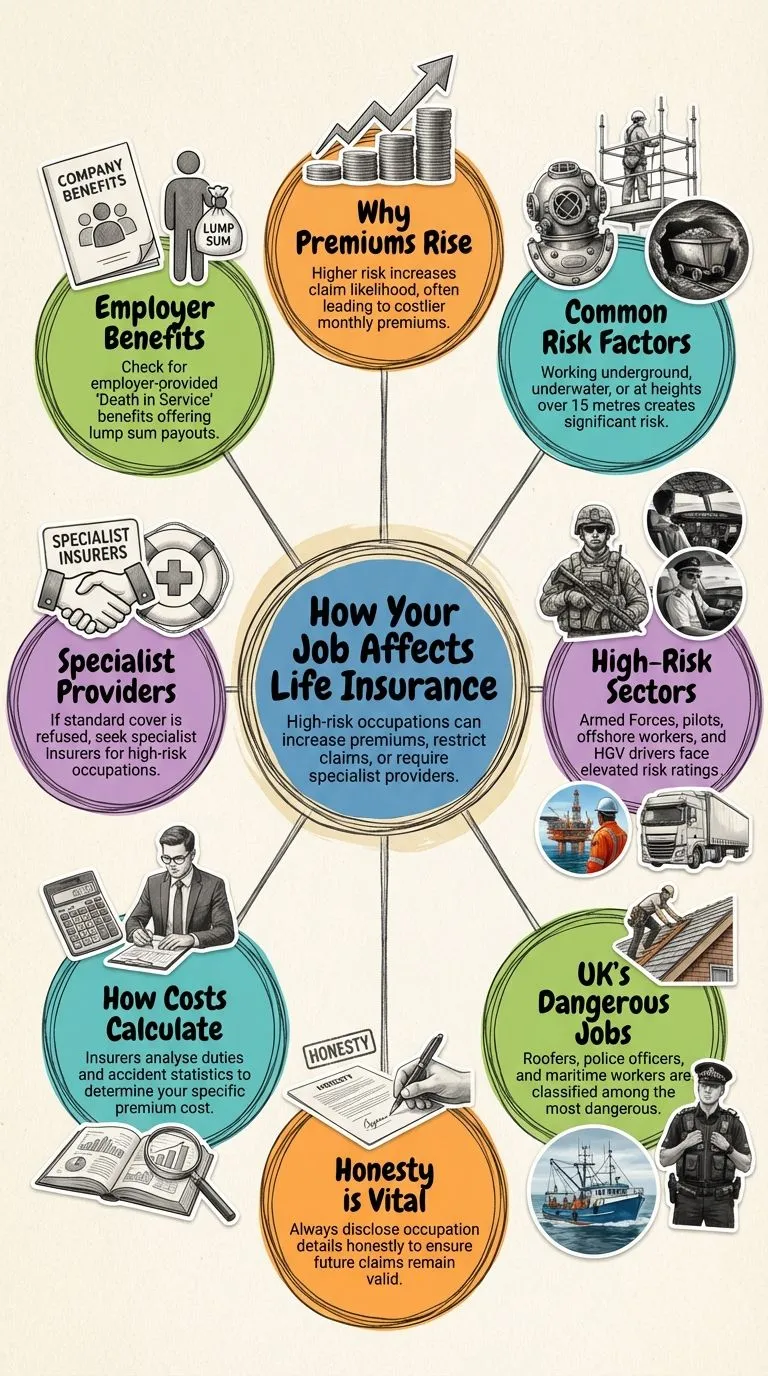
Some examples of “high-risk” occupations include those who work in the Armed Forces (such as the Army, Navy, or RAF), firefighters and police officers, offshore workers, deep-sea divers, pilots, and other individuals who work at heights.
When it comes to life insurance policies, Income Protection and Critical Illness Cover, these occupations are considered higher risk than the average job.
- Since individuals who work in high-risk occupations face a higher degree of danger, they are considered a higher risk to insurance companies.
- Because of this, many companies will give the individual an option with the Critical Illness Cover.
- They can either be placed on “normal terms” (no price increase) or “special terms” (including a price increase).
Income Protection Insurance can sometimes be difficult to obtain due to the increased risk of injury or death and the strict medical requirements.
What Insurance Companies Need to Know
Each life insurance company is different – they will ask various questions about your health, lifestyle, and occupation from one company to the next.
Additionally, the required information will vary depending on the type of coverage, such as critical illness cover or income protection insurance, to be included in the plan.
In some cases, insurance agents will not require you to go into much detail about your occupations, daily tasks, and risks on the job unless you hold a high-risk position.
For those individuals who work in the Armed Forces, as firefighters or scaffolds, among other high-risk occupations, insurance companies will ask many more detailed questions.
Click To Compare QuotesFor example, during the application process, the insurance agent may ask about your daily work tasks and where your occupation is based (such as the region where you work or whether you work onshore or offshore).
They may also ask about the hazards you encounter daily, such as explosive handling or chemical exposure.
When an insurance agent evaluates an individual’s risk to the company, he or she will consider all of these factors, along with many others, including health status, lifestyle, and any pre-existing conditions.
They will then compare this risk analysis to the required coverage to help determine your overall insurance rates.
In most cases, those in high-risk occupations pay more for life insurance than the average individual.
How Claybrooke Can Help
With the large number of life insurance agencies in the United Kingdom, all taking a different stance on high-risk occupations, it is impossible for an individual to compare them all.
In some cases, insurance agents offer exclusions for high-risk occupations, while others increase insurance rates to cover their risk.
Claybrooke is a valuable resource for finding and comparing life insurance policies that offer comprehensive coverage and are affordable for individuals.
External resources and helpful guides:
- https://www.legalandgeneral.com/insurance/life-insurance/lifestyle/dangerous-jobs
- https://www.vitality.co.uk/life-insurance/guides/high-risk-occupations